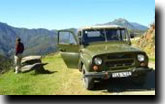
You are planning a trip to Vietnam and are having
difficulties deciding where to go and what to do, what you
cannot miss and what to skip. From the feedbacks of our
customers, Tailormade Vietnam Holidays would like to recommend
some activities considered by travellers as must-do's when you
are in Vietnam....
read more

Responsible Travel
|
Tailormade Vietnam Holidays practices a thorough, realistic Responsible Travel Policy. We believe that travel should entail an exchange of knowledge and perspectives, a sharing of wealth, and a genuine appreciation of Vietnam 's beautiful natural environments. This philosophy underpins the heart and soul of our style of travel. It drives all that we strive to deliver to our travellers, and shapes the contact we have with our supplier colleagues in Vietnam . We recognise that poorly planned itineraries or poorly informed tourists contribute less to cross-cultural understanding and less to the livelihoods of local people. We also recognise that we work in a developing country of the world. Political and social factors sometimes impede the the implementation of our responsible travel initiatives, so we aspire to short or medium term implementation of our policies where this is realistic and to incremental change where there are constraints of a governmental or cultural nature. OUR
Responsible Travel Policy Social
- our
Tailormade Vietnam Holidays staff
Social
- our operations
Social
- our style of travel
Environmental
Economic
OUR Guide to Responsible Travel While we hope that your holiday in Vietnam will be stimulating, relaxing and even exciting, we also hope that you will get more out of your stay in this wonderful land of the world than rest and recreation. As part of our Tailormade Vietnam Holidays Responsible Travel Policy, we've prepared some pointers which we hope will make for more informed, more 'responsible' holidays. Prepare
responsibly Learn a lengua. Pick up a phrase book, ask your tour leader or local guide, or mix with the locals. Learn a few key phrases and a passage of smiles and fun will open up. You will shop smarter, gain a better insight into cultural nuances, and enjoy more enriching experiences with local people. Rest
responsibly Towel for tomorrow. Keep your use of towels and linen to a minimum. Speak to your tour leader or local guide to request that linen is not changed daily by hotel housekeeping services. This will not only help to reduce the amount of water used during your visit but will also reduce use of detergent. Leave off the lights. Turn off lights when not in the room, and turn off the TV when no one is watching it. Air-conditioning is a huge energy user, so - most importantly - do not use air-conditioning unless you need to. Shop
responsibly Purge plastic. Keep your use of plastic bags and packaging to a minimum. Undeveloped Vietnam does not have the facilities or the capacity to engage in mass recycling, so this means that plastic waste is usually buried. Without light, buried plastic can take literally hundreds of years to break down. Consider shopping with a cotton carry bag, or re-use a plastic bag. Say no to plastic straws in drinks (and learn how to say this in the local language!) Purchase in provinces. Spread your shopping across your holiday destination, outside the usual shopping meccas, as well as in places rightly famous for their shopping opportunities. Spending in villages and the provinces will help spread the direct benefits of tourism across wider geographic areas. Be friendly to forests. Don't purchase hard wood furniture manufactured from illegally felled lumber or made from lumber of unknown origin. Hard wood deforestation has scarred vast tracts of Vietnam in recent decades and has profound social, economic and environmental consequences for local populations. Arguably, it also accelerates the rate of global warming. Respect the protected. Do not buy sea shells, coral, or animal parts (tiger teeth, bear claws) which are likely to have been obtained illegally, or which are sold illegally. Don't buy captive animals or birds in order to set them free, as this perpetuates demand for an unnecessary, cruel practice. Do not take photographs of captured or performing wildlife. Spend socially. Wherever possible, shop in outlets that support community groups such as women's projects, disabled groups or similar. Ask your tour leader or local guide to tell you where these places can be found. Dine
responsibly Stick to staples. Many restaurants in Vietnam serve animals which are protected species. Shy away from the novelty appeal that goes with ordering an exotic food. Do not order wild animal species from restaurant menus; consume instead meats and fish which are farmed sustainably. Move
responsibly Dress to impress. People in Vietnam generally dress conservatively. Women tend not to wear revealing tops nor skirts or pants that show their knees and even men will usually prefer long pants to shorts (smart knee-length shorts are fine). 'Follow suit' and dress with a sense of decorum. As well as showing respect to local dress norms you may also find that you are afforded better all round reception from local people, and better service in shops. First impressions count for a lot in Vietnam , and your dress style presents a visible and prominent fa??ade to everyone you come in contact with. Snap with sensitivity. A camera can be used as a fun social ice breaker, but to some people it can also be an invasive and offensive tool. Try to be discreet, ask permission before taking a photo of someone, and respect the wishes of people who clearly do not want to be photographed. Consider sending photos back to your subjects (through your tour leader) but do not go back on your word when you do this. Think very carefully about the implications - for your subject and for future travellers - before paying for a photo. Offer only alms. Do not give money, presents or candy to children on the street, at home, or in village communities. Gift giving creates inequality within communities and encourages children to start begging. Giving money (even to children who offer to act as guides) can also make children the primary income earners in their family, resulting in long-term school truancy. Giving money to adult beggars is a slightly different proposition, and is more often socially normal in Vietnam . The appropriateness of giving money to adults is often situation-specific, so defer to the advice of your tour leader or local guide. Gifts such as text books and pencils are best given to organisations (such as schools or clinics) rather than to individuals, as distribution through a community channel is more likely to occur equitably, and with dignity. Ride a cyclo. In your free time, consider getting around by man-powered cyclo. As well as being environmentally friendly modes of transport, the drivers of these distinctively Vietnamese vehicles are often from the poorer stratum of society and can benefit economically from the patronage you give them. Chip in for a charity. Tailormade Vietnam Holidays supports the work of a number of charitable organisations working in Vietnam , all of whom would be enormously grateful for any financial donation you could make. Speak to your tour leader or local guide for specific information on how to donate to organisations which would appreciate your assistance. Snorkel sensibly. When snorkelling, diving, or observing marine mammals such as turtles, observe environmental guidelines. Never touch or break living coral! Never touch or feed any marine animal or fish. |
Read more